When something stressful happens, most of us do the same thing: we react. Fast. Without thinking. We send the sharp email, snap at a loved one, agree to something we didn’t want to, or spiral into worst-case scenarios before the situation has even settled.
That instant, automatic reaction is your nervous system doing its job, protecting you from perceived threat. But while it’s useful in true emergencies, it’s far less helpful in the challenges you face every day: the tense meeting, the awkward conversation, the unexpected bill, the news you didn’t want to hear.
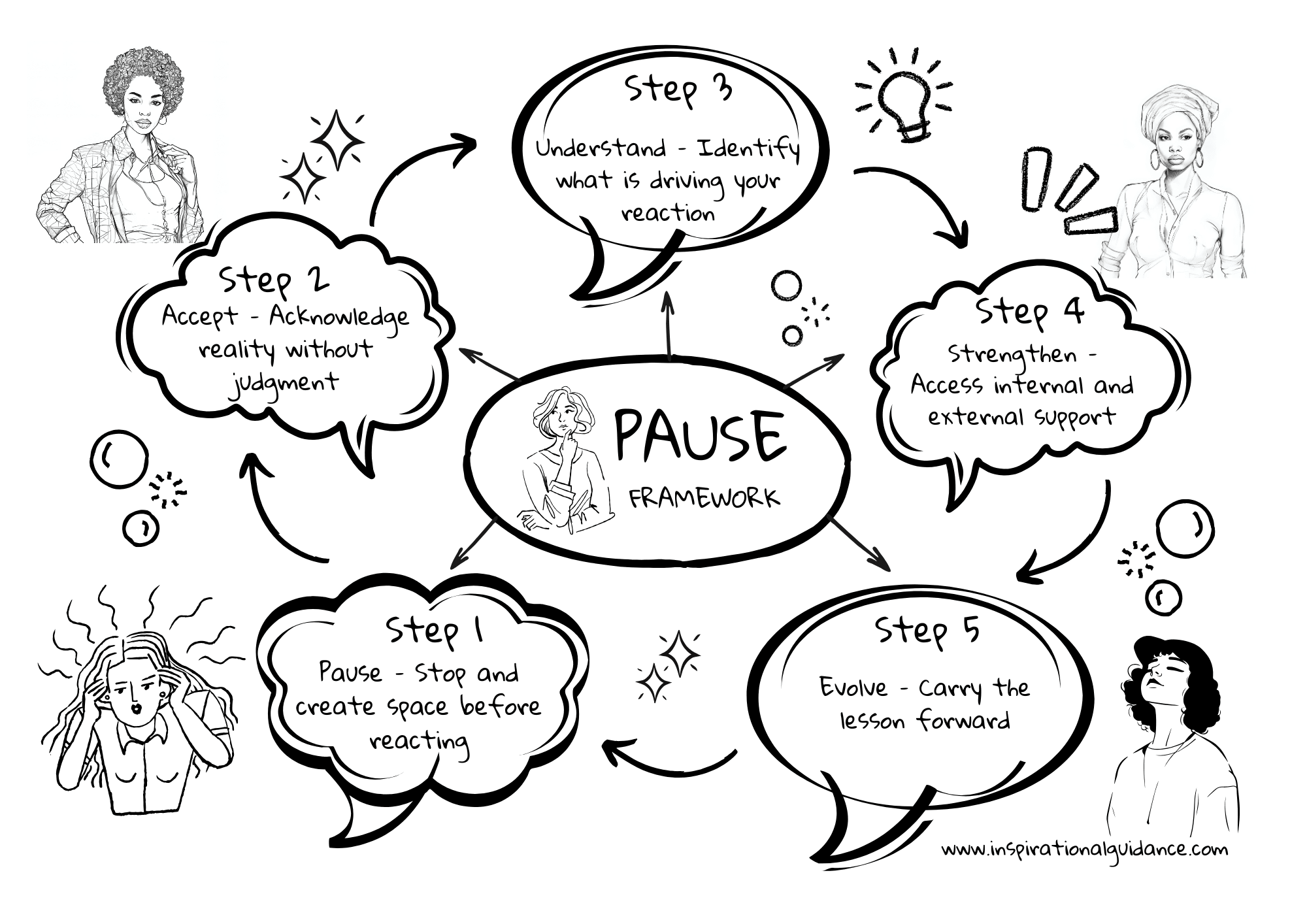
This is where the Pause step of the PAUSE Framework comes in. I created this framework and it’s deceptively simple: stop for a moment before you do anything else. Those first few seconds are a goldmine. They are the space where you can choose the tone of what comes next.
I built this framework after noticing the same pattern in my own life for years. The reaction fired off before I'd even registered what had happened, and then the clean-up afterwards took ten times longer than the pause would have. I don't always get it right now either. I just catch myself faster.
- A pause interrupts the brain’s threat loop long enough for your thinking brain to come back online.
- Rehearse it in calm moments with your breath, your body and a physical cue, so it is there when you need it.
- Pausing looks like confidence, not weakness.
- Every other step of PAUSE relies on this first one.
Why the Pause Works
The pause is more than just “taking a breath.” Think of it as a protective buffer between what happens to you and what you do next. It interrupts your brain’s threat-reaction loop long enough to engage your higher thinking skills. Here’s what happens:
- Fight-or-flight slows down. The amygdala’s emergency signal gets a chance to quiet, letting the prefrontal cortex (your decision-making brain) re-engage.
- Your stress hormones ease. Cortisol and adrenaline start to lower, reducing physical symptoms like a racing heart or tense shoulders.
- Options appear. Instead of only seeing “attack” or “avoid,” you begin to notice other responses available to you.
Without a pause, you risk letting adrenaline and emotion run the show. That’s when sharp words slip out, hasty decisions get made, and you find yourself cleaning up messes you never meant to create.
I learned this the expensive way, replying to a difficult email within minutes of reading it, when a few hours of not reacting would have changed the entire tone of what I sent back. These days I have a rule: if it made my chest tighten, it waits until tomorrow.
From a resilience perspective, this momentary space is everything. Without it, you’re at the mercy of habit and emotion. With it, you have choice, and choice is where your power lies.
How to Pause in Real Life
When you’re in the middle of a challenge, slowing down can feel impossible. You don’t need a meditation cushion or a week in the mountains. The trick is to rehearse the pause in low-pressure situations, so it’s there for you when you really need it.
- Anchor the pause to your breathInhale slowly for four counts, exhale for six, and drop your shoulders. That extra-long exhale activates the part of your nervous system that tells your body “we’re safe.”
- Notice your body before your thoughtsTight jaw, shoulders creeping up to your ears, clenched fists, shallow breathing. This is your early warning system, so you can pause before the words leave your mouth or your fingers hit “send.”
- Use a physical cuePress your thumb and forefinger together, touch a bracelet, or place your hand over your heart while breathing slowly. Rehearse it in calm moments so your body links the gesture with stillness.
- Picture a pause buttonThis is an NLP technique. Imagine a large, bright “pause” button and press it as you breathe. Add the click of a switch to lock in the link.
- Give yourself permission not to fix everything instantlyTell yourself: “I don’t have to decide right now.” That one sentence can dismantle the false urgency behind knee-jerk reactions.
Everyday Situations Where the Pause Changes Everything
- Workplace tension. You open an email from a client and it’s brimming with criticism. Your stomach knots. Instead of defending yourself, you press your thumb and forefinger together, take a long breath, close the email and take a short walk. You return with a clear head and a reply that addresses the concerns without feeding the fire.
- Parenting stress. When your teen says something provocative, the pause can mean the difference between a shouting match and a constructive talk.
- Difficult decisions. If you’re being pressured to say yes on the spot, a pause gives you the space to check if the decision aligns with your values.
- Unexpected bad news. The pause helps you process what you’ve heard, so you can respond from steadiness rather than panic.
Why Slowing Down Feels So Unnatural
If you feel uncomfortable pausing because it seems “weak” or “indecisive,” think again. In reality, the opposite is true. Reactivity is often impulsive; deliberate action is confident. The discomfort usually comes from conditioning to please or perform, fear of appearing unprepared, or years of being the fixer for everyone.
“I don’t have time to pause.”
You only need a few seconds. A deep breath is enough to stop a chain reaction.
“I’ll look like I don’t know what I’m doing.”
Pausing often looks like confidence. Silence can feel exposing, but it also communicates calm authority.
“I’ll lose my chance to speak up.”
Pausing doesn’t mean silence forever. It means choosing your words with care, so they land better.
Turning the Pause Into a Habit
Resilience grows through repetition, not perfection. Here’s how to make pausing second nature:
- Pair it with a daily cueEvery time you pick up your phone or open your laptop, take one slow breath before acting.
- Start with micro-pausesEven three seconds before you speak or click “send” counts. You can lengthen the pause over time.
- Reflect at the end of the dayJot down one situation where you paused and how it changed the outcome.
- Celebrate the winsNoticing that you handled something better because you paused links the habit to positive results.
The power of the Pause isn’t in the stillness itself, it is in what that stillness makes possible. You catch yourself before falling into old patterns, choose a response that aligns with your values, protect your energy, and build self-trust by proving you can stay steady under pressure. In the PAUSE Framework, every other step (Accept, Understand, Strengthen, Evolve) relies on this first one. If you skip the pause, you skip the opportunity to engage your best thinking.
Try one pause today
- Where today could I use a pause?Notice one moment. Try a breath, a physical cue, or a mental pause button.
- How did it shift my tone, my decision or the outcome?
Try It: The Stress-Relief Game
Slowing down is a skill, and like any skill it helps to rehearse it somewhere low-stakes. Our free Stress-Relief Game resets your focus in under 60 seconds: play the calming game.
- The pause is the gateway to every other tool in your resilience kit.
- Use your breath, your body’s early signals and one physical cue.
- Start with micro-pauses and build from there.
- Small steps create big change, and the Pause is your very first one.
This article is part of the PAUSE: Five Words That Can Change How You Handle Any Problem series. Download the free guide below to learn all five steps: Pause, Accept, Understand, Strengthen, and Evolve.