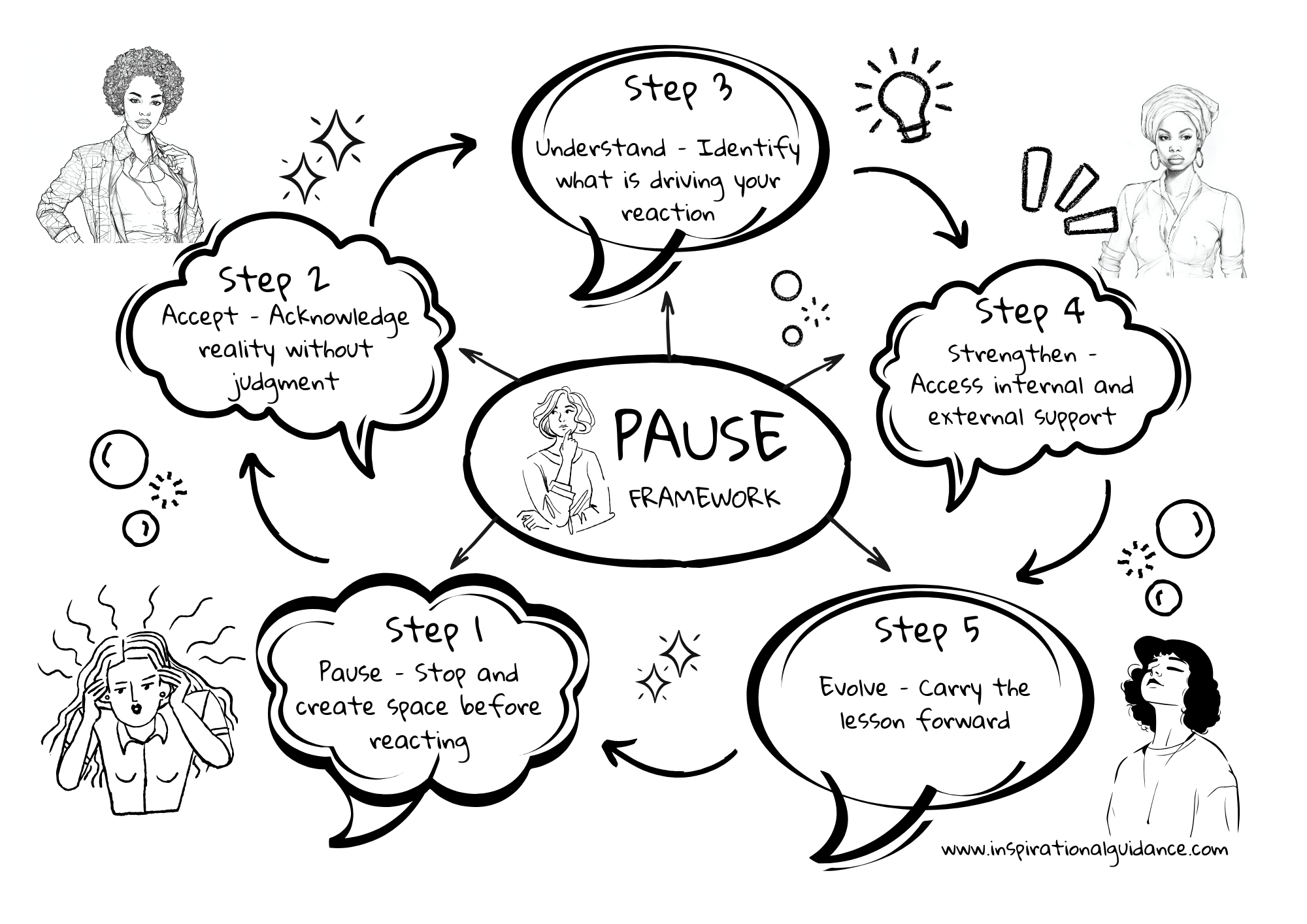
Life will always throw challenges our way whether we want them or not. The best way to deal with them is to strengthen the way you meet them. The S in PAUSE is for Strengthen and is about growing the habits, resources, and relationships that make you bounce back faster. The beating heart of emotional resilience.
If you have been following the PAUSE framework, by the time you reach Strengthen, you have already paused, accepted the reality of your situation, and understood the deeper why behind your reaction. Now it is time to build the capacity to handle the next challenge with more ease.
This isn’t about pushing yourself harder or toughing it out. It’s about building a foundation you can stand on when life shakes beneath you: mental habits that steady your mind, routines that restore your energy, and connections that remind you that you are not alone. And it doesn’t require a dramatic life overhaul. Real, lasting strength comes from micro-habits, small consistent actions that add up to something powerful over time.
The habit that actually rebuilt my resilience wasn't dramatic. It was going to bed at a decent hour, most nights, for about three months straight, while everything else in my life stayed exactly as chaotic as it had been. Nothing about my circumstances changed. I just had more capacity to meet them. Another one was ridiculously small: making my bed every morning, even on the mornings I didn't want to get up at all. It sounds too minor to matter, and for a long time I thought so too. But it was the one thing I could always control on the days everything else felt shaky, and that mattered more than its size suggested.
- Strengthening is care in advance, not repair after.
- Micro-habits are so small you cannot talk yourself out of them, and they compound.
- Resilience has four sources: body, mind, emotions and people.
- Strength is not isolation. It is connection.
Why Strengthening Matters
Without ongoing strengthening, every challenge feels like starting from zero, you burn out more quickly, and you rely on willpower instead of resilience. With consistent strengthening, you recover faster from setbacks, you feel more capable in unpredictable situations, and your confidence grows.
Micro-habits work because they:
- Lower the barrier to action. So small you can’t talk yourself out of doing them.
- Create compounding results. The effect multiplies over weeks and months.
- Rewire your responses. With repetition, these habits become automatic under stress.
- Boost self-trust. You see yourself following through, even in tiny ways.
Four Kinds of Strength to Build
- Physical capacity. Sleep, movement, hydration, nutrition.
- Mental focus. Planning, single-tasking, mindful breaks.
- Emotional stability. Self-talk, calming routines, boundaries.
- Social support. Friendships, mentors, safe spaces to share.
You don’t have to address all of these at once. Even one micro-habit in each area can create a noticeable shift.
How to Strengthen Yourself
- Choose habits that support, not punishSkip the “fix yourself” mentality. Pick actions that feel like care.
- Anchor them to your dayTie the habit to something you already do. While making your morning coffee, take three deep breaths. After shutting your laptop, write down one win for the day.
- Keep them ridiculously smallInstead of “meditate for 20 minutes daily,” start with “close my eyes for three slow breaths.” Build from there.
- Build your support networkIdentify your inner circle of “first call” people, the ones who listen without blame and help you see clearly.
- Train in calmUse grounding tools (breathing, walks, mindful pauses) during everyday moments so they’re ready for high-stress ones.
- Use the “Power Anchor” (NLP)Recall a time you handled something hard. Step into that memory and see what you saw, hear what you heard, feel what you felt. Press your fist lightly into your palm to store that steady state, and repeat daily so the gesture brings it back.
- Tick off and celebrateUse a simple tracker to tick off your habits. Small wins are the foundation of bigger change.
Everyday Examples
- Morning grounding. Stretch for 60 seconds before reaching for your phone.
- Work reset. Step away from your desk for one minute every hour.
- Emotional support. Send one “thinking of you” text to a friend each week.
- Confidence boost. End your day by noting one thing you handled well.
- Before a tough meeting. Recall a time you successfully pitched an idea. Stand a little taller, feel the energy of that win, and walk in ready.
Why Strengthen Feels Different From Fixing
Many women equate building strength with fixing what’s broken. But that mindset makes resilience a moving target because you are never “done.” Strengthen isn’t about proving you can survive the next crisis. It’s about building enough capacity that challenges feel less overwhelming when they arrive.
“I don’t have time to work on myself.”
Strengthening doesn’t have to be a project. It can be built into your existing routine one small step at a time.
“I should be strong enough on my own.”
Strength is not isolation. It is connection, and the power that comes from being there for others and having others be there for us.
Pair this step with Understand: once you know your triggers, choose micro-habits that help with those situations. Start with one habit per week and let it stick before adding more. Mix internal and external supports, and review monthly as your needs shift. As your micro-habits settle in, stressful events take less out of you, you recover faster from setbacks, and you trust yourself to handle more without falling apart. This isn’t about becoming unshakable. It’s about becoming steady enough that life’s bumps don’t throw you off course. That is the core of emotional resilience in the PAUSE framework.
Pick one micro-habit
- Which micro-habit could I do in under two minutes this week?Something that will leave you feeling even 5% more resilient.
- What existing part of my day can I tie it to?
- Strengthen means building capacity before the next challenge arrives.
- Start with one tiny habit tied to something you already do.
- Add support from people, not just inner tools.
- Small steps compound.
This article is part of the PAUSE: Five Words That Can Change How You Handle Any Problem series. Download the free guide below to learn all five steps: Pause, Accept, Understand, Strengthen, and Evolve.